


The ex-prime minister of Bangladesh has been given a death sentence for crimes against humanity stemming from her harsh response on protests led by students which led to her ousting.
The court convicted Sheikh Hasina of allowing lethal force to be used against activists, among whom around 1,400 people died during the disturbances in the previous year.
Legal proceedings were conducted while she was absent by the International Crimes Court in Bangladesh, since she went into exile in India after being removed from office in July 2024.
Legal authorities charged her of being behind numerous deaths during the protests. Hasina has denied every accusation, labeling the proceedings as "unfair and agenda-driven".
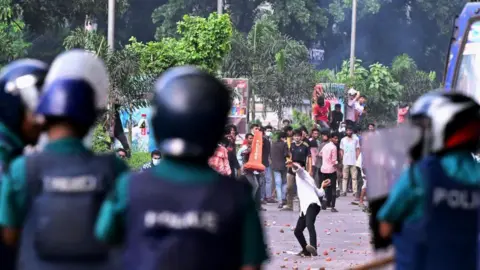
The decision signifies a pivotal moment for Bangladesh, as the protests brought forth resentment over extended periods of oppression. Next of kin of victims and harmed had demanded strict sentences.
Answering the judgment in a comprehensive declaration, the former leader stated the execution sentence was the temporary leadership's way of "eliminating her political faction" as a political force and that she was satisfied of her leadership's history on civil liberties.
"I have no trepidation to face my accusers in a just legal forum where the proof can be evaluated and tested fairly."
The capital, Dhaka, where the legal proceedings occurred, was under increased safeguards before the decision on Monday, with several of her detractors holding a protest and applauding as the sentence was declared.
The capital witnessed a sudden increase in turmoil, with numerous incendiary devices set off and coaches ignited in the period preceding the verdict.
At least one bomb explosion was noted in Dhaka on Monday morning, with no casualties reported, local police official the police spokesperson told press agencies.
The student-led uprising last year started with demands to abolish state employment quotas but evolved into a more extensive dissent initiative.
UN human rights investigators declared in an analysis in February that the approximately 1,400 deaths could amount to "crimes against humanity".
The paper detailed the firing at close quarters of some protesters, the purposeful disabling of additional individuals, unjustified apprehensions and abuse.
Leaked audio of one of Hasina's phone calls verified by external reviews earlier this year indicated she had approved the use of "fatal instruments" in July 2024. The sound file was broadcast in court during the legal process.
Prior to the ruling, kin of those fatally injured in the unrest informed media representatives they wanted the former leader to face strict penalties.
Ramjan Ali, whose family member was fatally wounded in July 2024, said he wanted "exemplary punishment" for her and co-accused who have "performed revengeful deeds and abused their power".
Another relative, whose spouse died near Dhaka in August 2024, said she wanted the former leader's punishment to be "implemented before the election".
"Exclusively thereafter the relatives of the deceased [in the protests] will find peace in their minds."
Since Hasina's ousting, an temporary leadership headed by economic expert Muhammad Yunus has assumed power. A parliamentary election is scheduled for February 2026.
Nonetheless, the Awami League, her political faction, was prohibited by Bangladesh's temporary leadership in May.
The former leader cautioned last month that if the her faction's nominees were barred from participating in the forthcoming vote, millions would boycott the vote.
The judgment creates a diplomatic challenge for the neighboring countries. Authorities have sought her extradition but to date India has demonstrated no inclination to agree.
Hasina's state-appointed lawyer her legal counsel said he was "sad [and wishes] the verdict had been different".
"I even cannot appeal because my defendants are not present; that's why I am sad," he added.
Recently, her legal team said they had filed an urgent appeal to the UN highlighting serious fair trial and legal procedure concerns at the ICT.
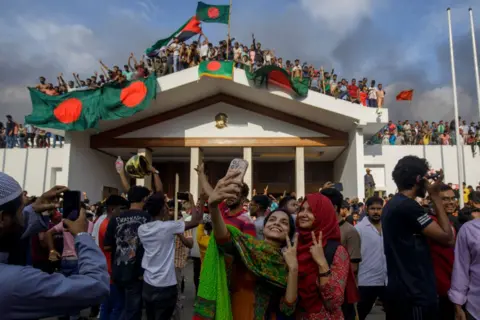
The former leader faced trial together with her former home minister and top law enforcement officer.
Even though the verdict provides certain resolution to families of killed in the protests, it may do little to soothe the country's political divisions.
"The anger against Sheikh Hasina and the the former ruling faction has not decreased," a Dhaka-based rights activist stated to press agencies. "The leader and her faction has apologised or shown any remorse for the deaths of numerous individuals."
The activist stated "It makes it difficult for the faction to gain approval by a majority of people in this country."
The advocate continued that the sentence was not closure for the kin of those who died and were wounded.
"We assist numerous persons who underwent irreversible limb loss, they are amputees now, because of the suppression. They cannot pardon her."
A journalist, a journalist and a long-time Bangladesh watcher, said the "fundamental aspect of the condemnation could make it increasingly challenging" for Awami League to become a normal feature of Bangladeshi politics again.
This may change if "an expression of regret occurs and a disassociation with Sheikh Hasina and the former hierarchy," he said.


