

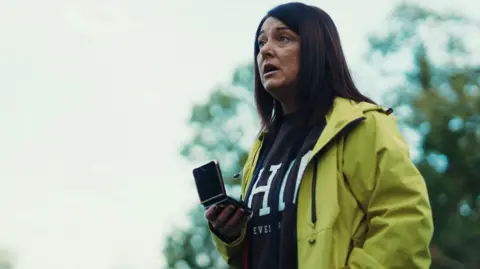
During an discussion near a community green space in the community, a came forward.
Might I ask why you’re encouraging these individuals to occupy this park?” she asked while documenting the conversation on her mobile device.
The man we were speaking with for our documentary was residing in a nearby asylum hotel, where heated demonstrations had been taking place since the warmer months.
The woman claimed that individuals from the accommodation had been interacting with local youths, and asked that we take our discussion to another location.
Then, a collection of residents who we didn’t see playing football in the vicinity came over the hill.
She told me it was my fault they were there and if “any incident occurs here, it’s on you.”
The resident uploaded her recording to the internet. It was viewed millions of times after being shared by right-wing figures.
She was praised as a defender for protecting families.
I was deluged with abuse and warned that I should avoid the town.
I disagree that my interview with this individual, who subsequently withdrew consent its use, put anyone in danger.
But this confrontation, and its consequences, gave me likely the sharpest perspective yet into the fear some within the area – and further afield – have about refugees in their local areas.
Resident Worries and Rallies
There are about over six thousand people applying for refuge in Scotland, many of whom came via vessels across the waterway.
About a fourth reside in temporary accommodations while the UK government evaluates whether to approve their applications.
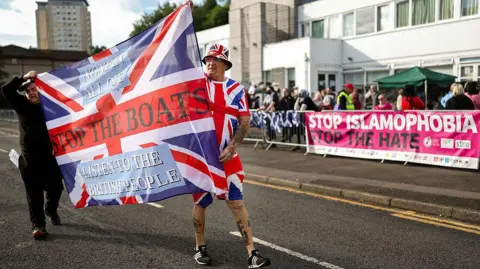
We’ve spent the last few weeks recording at protests against the accommodations around the country.
In the town, there are more than 11,000 names on the waiting list, awaiting new homes. There is anger at a belief that these people – and it is exclusively males in the Cladhan Hotel – have jumped the queue.
Refugees are not generally authorized to have jobs while their applications are being reviewed and get an allowance of a small amount a day to survive on. With provided food, accommodation and no bills to pay, it sticks in the throats of several.
“They’re getting TV, they have comfort, they receive apparel, they’re getting communication tools, they’re getting health services and if you believe that’s right in our nation right now, I disagree.”
Cell phones are not provided by the government but are often provided to hotel occupants by groups who assist them.
Protection Concerns and Resident Divisions
The men in the Cladhan come from a variety of nations, including Asia, the continent and another region, and all claim they need asylum from threats.
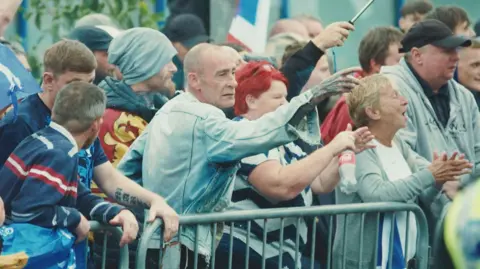
Periodically we could see them watching from behind drawn blinds, as chants of “Return them! Return them!” echoed through the neighborhood.
The Cladhan was formerly a preferred venue for events, milestones and birthday parties.
Minimal consultation was provided or dialogue arranged with the local community that up to 90 asylum seekers were going to be housed here in the past.
“There is a sentiment that a matter is being dropped on them from a great height by people who neither know nor care what the consequence is going to be.”
All the financial outlays of sheltering asylum seekers in accommodations, about a significant amount a year across the United Kingdom, are met by the authorities.
Falkirk Council’s leader said no individual was awarded special treatment over anyone else.
But it’s not just strain on resources which has got residents out on the public spaces. There is fear, too.
Ex individual Sadeq Nikzad, from a foreign country, was sentenced in June for the crime of a underage local girl.
“It hurt deeply to know that that young woman’s life was destroyed.”
“We shouldn’t be living in terror,” she stated.
In the previous year, the period of Nikzad’s act, there were 82 cases of rape or attempted rape in the town.
Authorities says it does not hold information showing whether perpetrators are asylum seekers or not.
From news coverage, it seems a single case was perpetrated by an asylum seeker that period – by Nikzad.
“Residents do this too, but the fact is that the boats are still arriving. They [the refugees] have a distinct perspective.”

